
Hello everyone,
- Jensen’s fall and the impact on AI.
“TOO BIG TO FAIL”
Remember that phrase? It was used incessantly during the Great Financial Crisis of 2008. Government leaders were determining what banks to prop up (Citigroup, Morgan Stanley) and which ones to let wither away (Lehman Brothers, Washington Mutual). Get it wrong and the entire economy collapses. That’s what happens when a company becomes so intertwined in the economy that failure is not an option. They’ve simply become too big to fail.
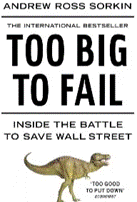
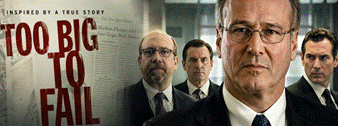
Andrew Ross Sorkin wrote a book on the subject in 2010, which was made into a movie the next year. It was a star-studded flick, which included the likes of William Hurt, Paul Giamatti, James Woods, Bill Pullman, Cynthia Nixon, Billy Crudup and Ed Asner. I guess a heady subject requires heady acting chops.
“Too Big to Fail” is typically relegated to the banking industry, and specifically the largest financial institutions. But not anymore. Who would’ve guessed that the phrase would also be used someday to describe a person? And yet here we are, the saga of Jensen Huang, the founder and now-former CEO of Nvidia, long seen as the poster child of the AI revolution.

There’s no need to regurgitate all the sordid details here. You all know the story by now. Jensen Huang is no longer the leader of inarguably the most influential company in the world. If you still need to fill in the details, just Google it. Or use your favorite AI tool, most likely powered by an Nvidia chip.
What I want to focus on are the story’s multi-layered ramifications and the impact on investors.
*National Security. Call it the new “Cold War,” only this time with technology instead of nukes. Win the race to operate and power the most sophisticated artificial intelligence systems and you will secure the mantle of the world’s superpower for generations to come. That’s not hyperbole. This comes directly from security analysts and the intelligence community in both the U.S. and China. The idea of a Chinese plant surreptitiously sending AI secrets back to the homeland is the modern-day equivalent of a Russian spy giving American military plans to Soviet generals. At this time we have no idea what Alice Huang (no relation to Jensen except for the affair) had in her possession or how damaging the information may or may not turn out to be. At this time the market believes it to be very minimal, if anything.
*Artificial Intelligence. Investors have a legitimate worry about what this unfolding story may do to the AI industry as a whole. What if Nvidia suffers, and by extension the entire AI subculture, because of the actions of one man? The domino effect cannot be properly calculated but it would be substantial. Nvidia is intertwined in virtually every facet of AI. Other companies are licking their chops to fill the void but this doesn’t happen overnight.
*Nvidia. The company itself now has a credibility problem, and I’m not talking just about its ex-CEO. There has never been any kind of succession plan in place. That’s not to say there aren’t some very capable people on deck, but he or she is not well known at this time, and they’d be thrown into a job they haven’t been groomed for. Until a full-time replacement is named, Chief Financial Officer Collette Kress, shown below, will sit in as interim CEO.

Meanwhile, the Board of Directors should be held accountable for much of this mess. They conveniently overlooked the most basic internal controls because everyone had been getting so wealthy off the company’s success. That’s what happens when you fill the board with friends and cronies. Expect major changes here. (Update: Harvey Jones has been named as Nvidia’s first-ever Chairman of the Board. He’s a chip-design executive who’s been on Nvidia’s board since its founding in 1993.)
*Single stock risk. Lastly, but no less importantly, let this scandal be a reminder of “single stock risk.” This is one of the oldest lessons in the world of investing, something on which I occasionally pound the table. Never, and I mean never, allow a single stock to grow so large that it becomes a major chunk of one’s portfolio. Investors can delude themselves into thinking that their winning stock can never fail. Sure, it may correct a bit here and there. But a complete crash? Never! But never is a long time, and every company goes through a dark period. As Jack Welch one remarked, and I’m paraphrasing, “you become a successful company once you’ve survived a near death experience.” Yep, even the late great CEO of General Electric knew that no company avoids suffering an existential moment, taking its stock down with it.
No one ever went broke taking profits along the way. As just one example, we’ve pared back our position in Broadcom, our largest single stock position, at least a half-dozen times over the last couple of years. Otherwise, that one stock would overwhelm our models, putting them at unnecessary risk. Did I mention that no one went broke taking profits?
I’ll leave you with a final thought on how I see this episode playing out. In my opinion, this does not derail the AI revolution one iota. The political landscape will have a larger impact, not the dalliances of a wayward CEO. Nvidia as a company has suffered a black eye but will continue to be a major player in the industry. It’s not going anywhere. (I make no recommendation on the stock.) Meanwhile, the national security issue will be ongoing. Investigations are underway to find out what Alice Huang knew and if they were valuable to the Chinese. The new Cold War will be alive and well for some time.
- Odds and Ends
- It looks as though the Fed will soon get back to the business of hiking interest rates. You’ll recall that the Fed raised short-term rates 0.25% in September, took a pause just before the election, and now, as the general consensus contends, will likely restart the cycle at its next meeting in December. The Fed is rarely one and done, and it’s unlikely it’ll happen this time either. That’s because of Tuesday’s strong inflation report. Consumer prices jumped 0.4% from September to October, a smidge higher than expected. The largest contributors were energy (+0.7%) and groceries (+0.5%). The question now isn’t if but by how much. Fed Governor Christopher Waller said the quite part out loud, suggesting that this inflation report was strong enough to justify a 0.5% hike next month. That wasn’t even being whispered a couple of weeks ago. We’ll see. The Fed’s announcement will be made December 9.
- The new tax brackets are out for 2027.
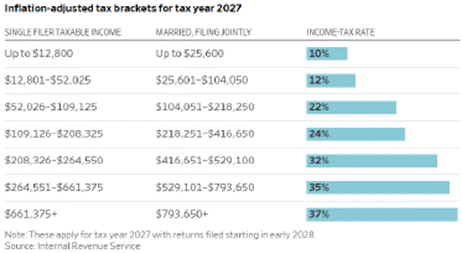
Expect these tax brackets to be a major source of political wrangling the next couple of years. Democrats have talked about expanding various tax credits. They’d pay for it by hiking rates on higher income earners. That would certainly be vetoed by President Trump, and it’s highly unlikely the Dems could get enough votes to override the veto. So this issue will likely be tabled until 2028, and then it’ll be dependent on how the elections turn out at that time.
- It’s a fact that a primary home has not grown in value at the same rate as the S&P 500 over the long course of time. That’s not to suggest that folks haven’t made a boatload of money buying vacation property or flipping homes at the right time. Again, I’m just talking about a family’s primary residence. But as you know, it’s all about location. And when we break it down by state, the best housing-price returns have come west of the Mississippi. Idaho, Arizona, and Oregon have recorded the highest price appreciation over the past 40 years.
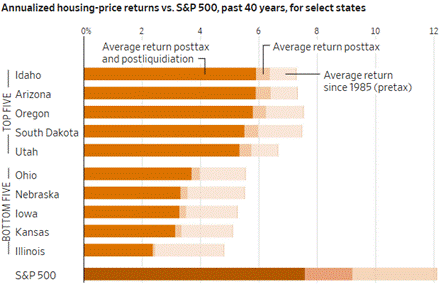
Source: Wall Street Journal, 11-5-26
When it comes to cities, the top performers were Seattle (6.2% annualized growth), San Diego (6.1%), and Los Angeles (6.0%). At the very bottom? Ouch, this one hurts. St. Louis (3.9%), Houston (4.0%), and Dallas, Cincinnati, and Chicago tied at 4.2%. I have to say it again with these kinds of reports. The St. Louis number is only for the city itself and does not include the county. Dallas may surprise you being near the bottom. But remember this goes back 40 years. Texas is beholden to the occasional energy boom/bust cycle. It would be much different if the report only looked at the last 10-15 years. Texas itself would likely be on the slide above.
Most of what I write here every week pertains to the here and now. It serves as a “current events” look at the markets and economy, along with my 2-cents added in for good measure. But as investors, let’s not lose sight of the timeframe that matters most. Not today or tomorrow, but for the next number of years and beyond. That’s the underlying theme to this week’s podcast. I detail what I expect from the stock market over the next decade or so, and it’s not particularly favorable. That’s not to scare anyone. It’s just to make sure we’re all prepared for what the 2030’s may bring us. Please check it out!
Regression to the Mean: Why Stock Returns May Fall After This Bull Market

Have a wonderful fall weekend, everyone! I’ll talk to you again next week.
Oh shoot, almost forgot. I need to try this again after last Saturday’s debacle so here we go…
Mizzou is going to shock the nation tomorrow by traveling to Georgia and upsetting the #1 ranked team in the country! The Dawgs will be full of themselves after blowing out Ole Miss last weekend. The Tigers will be full of vinegar after a comedy of errors by the officials led to Mizzou’s defeat to Texas. Missouri 27-24 over Georgia. You heard it here first! If I’m wrong, this commentary will self-destruct five seconds after the game’s final whistle.
Dave