A tale of two technological revolutions.
For those who were investing during the bear market of 2000-02, be prepared for a little investing PTSD in this week’s commentary. You’ve been duly warned.
Here’s the cover of Barron’s, March 20, 2000, right at the peak of the Internet bubble.
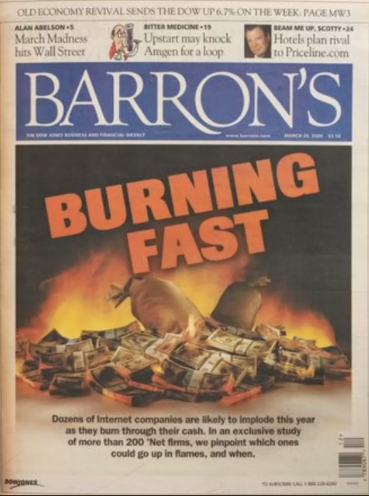
Journalist Jack Willoughby wrote an in-depth piece about a very inconvenient truth, the inevitable unraveling (at least according to Willoughby) of hundreds of new Internet-related stocks. The main theme of the article was that most of the recent startups had very little cash left in their bank accounts, and institutional firms were no longer pouring money into these “dead men walking.”
Here are a few selected lines from that prescient article, which by the way came at the precise peak of bubble mania in March 2000:
“When will the Internet bubble burst? For scores of ‘Net upstarts, that unpleasant popping sound is likely to be heard before the end of the year.”
“At least 51 ‘Net firms will burn through their cash within the next 12 months.”
“For many, there seems to be little realistic hope of profits in the near term.”
“A collapse in highflying Internet stocks could have a depressing effect on the overall market.” (Nailed it!)
Many Wall Street veterans would later credit Jack Willoughby for exposing a truth that few insiders were willing to acknowledge, and which would bring about the eventual crash. The Nasdaq, which housed most of these broken highfliers, plummeted 78% over a nearly three-year period.
I remember that article very well because it scared the living daylights out of me. But here’s what I also remember. After a couple of days the fear seemed to subside and investors went back to buying on the dips. They had been trained to do that during the previous five years. Investors only wanted to hear the good news so all the focus was on books like this one, released on October 1, 1999.
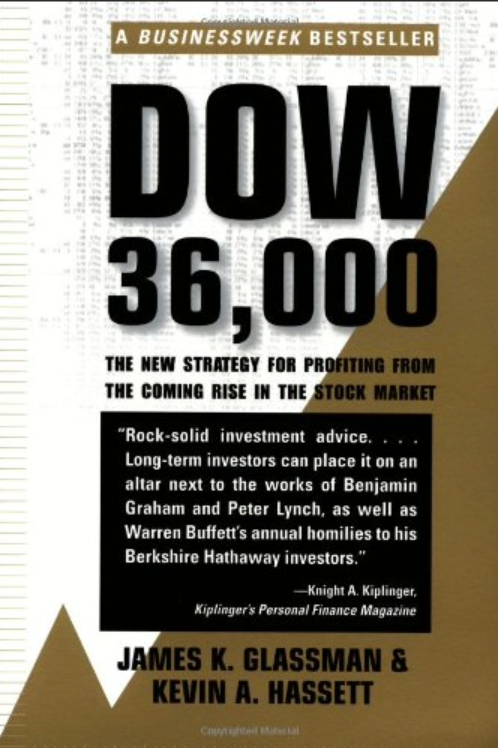
Jack Willoughby wasn’t invited on many financial shows to talk about his Barron’s article. Bad for ratings! Meanwhile, the authors of “Dow 36,000,” were everywhere, claiming the Dow would rise more than 3 ½ times over the next decade. Yes, the Dow eventually hit 36,000, of course. It occurred in November 2023, a mere 23 years after the book was published. “Missed it by that much!”
(By the way, did you notice the name of one of the book’s authors? Yep, that Kevin Hassett, the current economic advisor to President Trump and a leading candidate to replace Jay Powell as Fed Chairman. Back in 2000 he was a resident scholar at the American Enterprise Institute.)
There’s a reason for the history lesson, my friends. Bear markets, and I’m talking about the deepest and most painful ones, never begin when bubble talk is ubiquitous. Major declines occur when such talk is ridiculed and when the main topic of discussion is how the stock market is sure to skyrocket higher. That is NOT where we are today. No one is writing a book titled “Dow 100,000.”
Actually, they did!
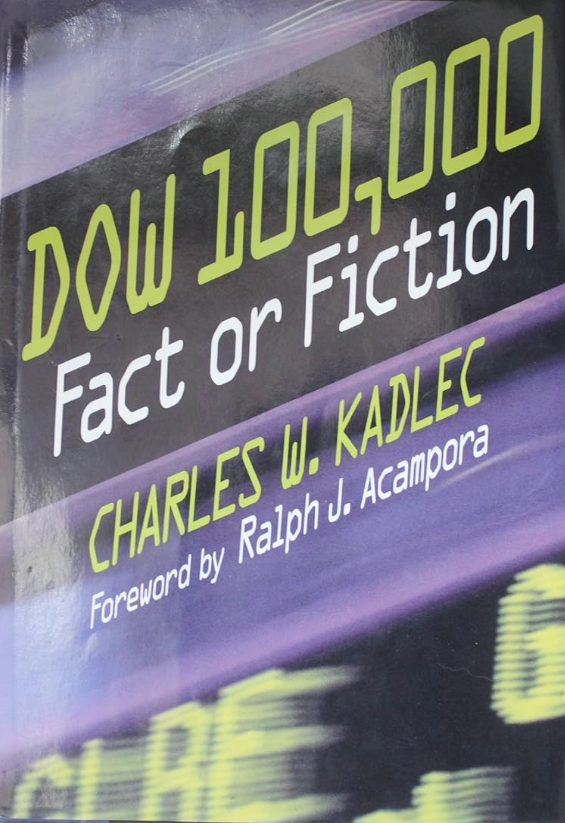
Here’s your laugh of the week. That book was released….are you ready for this?….on September 30, 1999. Bwahahahaha! The author claimed the Dow would hit the six-figure mark by 2020. According to my calendar, Mr. Kadlec sort of, kind of, missed the mark on that one.
But do you see my point? That’s how freaking crazy it was back then. Willoughby was shouting from the rooftops but investors, both professional and amateur alike, refused to listen. And his article wasn’t based on opinion or conjecture. It was based on hard data, real facts, of what was happening behind the scenes. And he was summarily ignored at the time.
We are nowhere near that today. As opposed to laughing it off, investors everywhere are concerned about a new bubble forming. Instead of dripping with greed, investor sentiment surveys are anywhere from neutral to slightly pessimistic. There’s definitely some growing avarice in the market but it’s relegated to Redditt sites and meme traders. When we look at real data we see that the two eras don’t come close to comparison. Here’s one example:
Source: Blackrock, 10-03-25
This is so compelling. Notice the four years leading up to the bubble bursting in 2000. Earnings growth was a cumulative 80% while the stock market soared 439%. Completely unmoored from reality. Now take a look at the last four years. 73% earnings growth and a market that has risen 94%. We were in La Land 25 years ago. We’re more in a state of rationality and reason today. I’ve been making this case on many of my recent podcasts so I hope you’ve been tuning in.
I’ll leave you by stating the obvious. I am not pretending the market is cheap or even fairly valued at these levels. We need a year-end correction. Pretty please! But we are nowhere near the Danger Zone of a historic market collapse, at least compared to past market bubbles. It’s certainly not the time to get more aggressive. But at least in our little corner of the world, we are staying fully invested with a defensive tilt in anticipation of an overdue pullback. I’ll beg one more time for a decline in stock prices. Pretty please with sugar on top!!
A tale of two technological revolutions.
I’m always on the prowl for the proverbial canaries in the coalmine, looking for the tipping point that could derail this bull market. I’m not talking about the aforementioned correction, something I welcome, but a deeper and more ominous pullback. Might we see it birthed from charts like these?
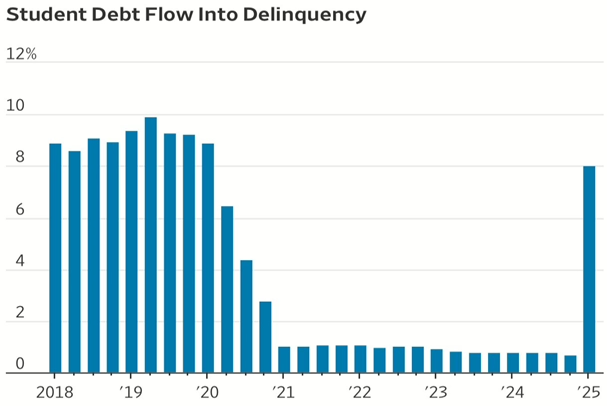
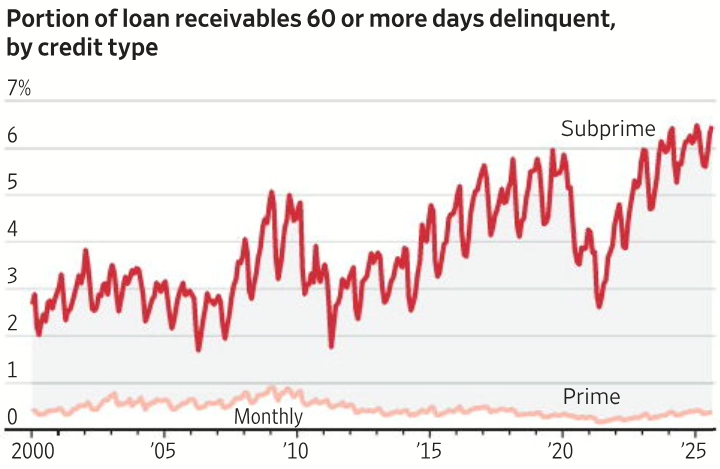
Source: New York Fed, 10-6-25 Source: Wall Street Journal, 10-13-25
Governments can simply monetize their debt. I’m not saying that’s welcome or recommended as it creates all kinds of additional problems down the road. (Inflation and currency devaluation, anyone?) The point is, there’s a way out for governments that individuals don’t enjoy. An accumulation of debt, and an inability to pay it off, can have a cascading effect that starts in one corner of the market and metastasizes through the rest of the economy. As you can see above, the Covid reprieve for student debt holders is over. And from what I’ve read many weren’t prepared for this, thinking their debt would be fully forgiven. (Don’t get me started!) Meanwhile, borrowers in the subprime market are having an increasingly tougher time making payments.
None of this suggests to me that we’ve crossed a line toward economic contraction. Not yet anyway. This may affect the economy at the margins but at this point I don’t see an immediate danger to the broader economy. With that said, we’ll keep an eye on these public debt reports and come back to these pages with any pertinent updates or developments. (I just reread that last line. Straight out of my old TV reporting days!)
As you may have heard, illiquid private equity funds are all the rage on Wall Street these days. They’re even being offered in 401k plans for the first time. (Terrible idea by the way. But I digress.) What’s interesting is that investors with the most money and experience seem to be the least interested in these opportunities.
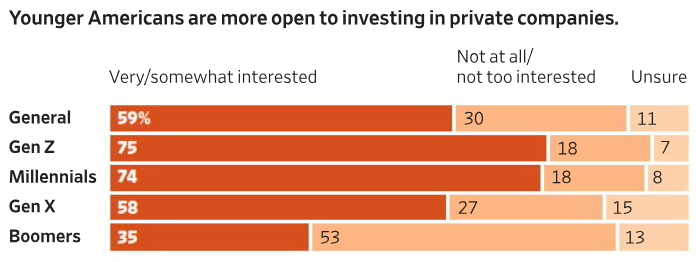
Source: Barrons, 10-18-25
In a recent survey, only 35% of Boomers say they’re either somewhat or very interested in investing in private markets. A little more than half give it the big thumbs down. On the other end of the age spectrum, three quarters of Gen Z’s and Millennials say they’d be interested in opening up the hood and taking a look. It’s telling that investors with the least amount of investment experience are the most interested in investing in products that are complex, opaque, costly, and highly illiquid. And I actually like the private equity world! In full disclosure I have personal money invested in the space. But I don’t think younger investors really understand what they’re getting into. The Wall Street marketing machine is in full throttle now that the old guardrails have been taken down. “Smell that, my son? That’s the smell of opportunity!”
Mark my words. You’ll hear a lot of public outcry about this in the future, and lawsuits are all but assured.
Outside of the occasional classic car, we all know that as soon as you drive the new car off the dealer’s lot you’re losing money. Your vehicle is not an investment, of course. It’s merely the most convenient and efficient way to transfer yourself from Point A to Point B.
But in case you’re interested in what makes and models tend to depreciate the least, here you go:
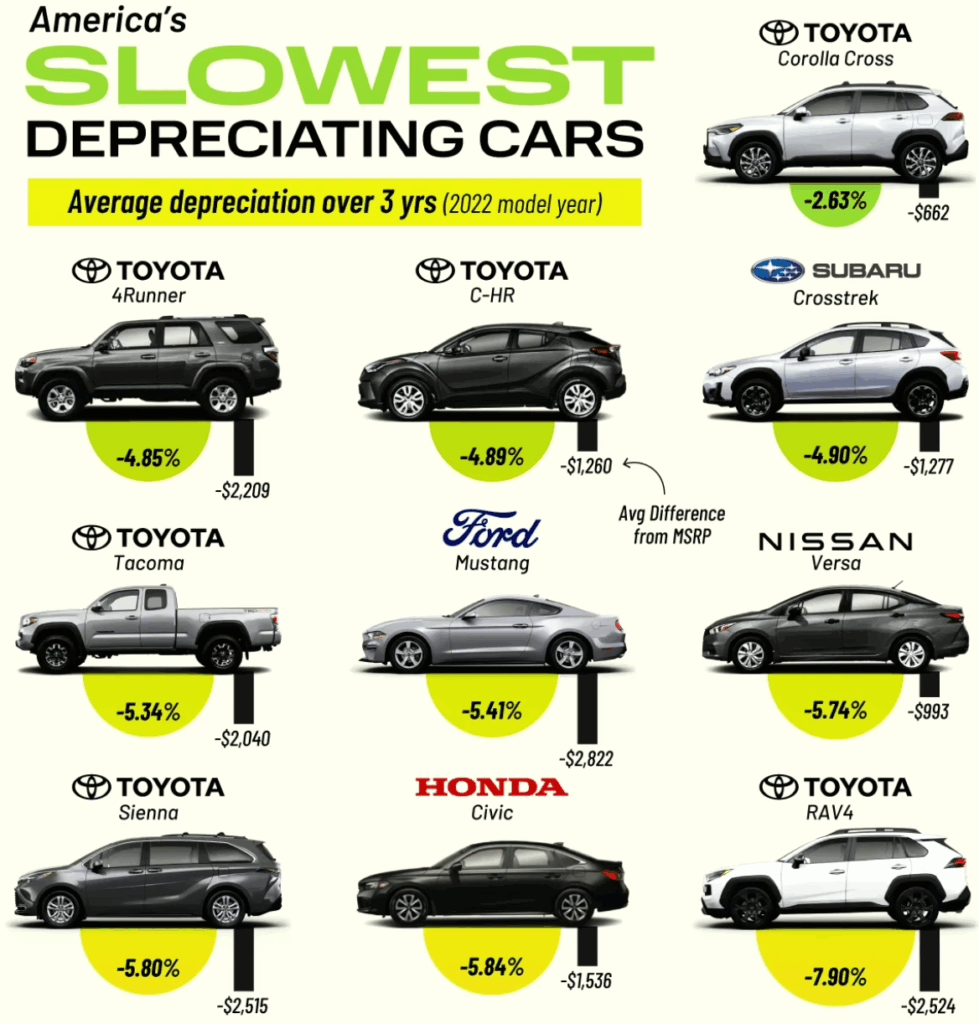
Courtesy: Visual Capitalist. Data: U.S. News and World Report.
The study by U.S. News and World Report looked at the purchase price of all the major models released in 2022, and then compared them to their resale price here in 2025. You can see the results, Toyota taking the top three spots and six of the top ten. I’m not a car guy at all. I buy a vehicle and keep it forever, with almost zero interest in what’s available out there. It’s just not my thing. The one I have now is sitting on 160,000 miles and I have no plans to get rid of it. But I did notice one car that really stands out in the picture. It’s the only purely American model, the classic Ford Mustang. The only time I was involved in a drag race was when I was a senior in high school. I had a Dodge Duster. My friend had a Mustang. I lost, crashing into a birch tree. (I was okay.) I retired from drag racing on the spot.
Keeping with the theme of comparing the bubble of 1999/2000 with today’s environment, you’ll want to check out this week’s Simons Says podcast. I reveal something very embarrassing about myself (worse that crashing into a birch tree) as I segue into a skill that has helped me distinguish between today and 25 years ago. Here’s the link:
The One Skill That Can Separate Smart Investors from the Crowd (And It’s Not What You Think)

That’s it from here, folks. A big Fed meeting coming up next week, and this one will be very interesting. Fed officials don’t have the usual amount of data at their disposal because of the government shutdown. But the consensus is they’ll cut another quarter point, and I agree with that opinion. I’m sure I’ll have a line about it next Friday.
Make it a great weekend!
Dave
Please reply to this email to unsubscribe from all future marketing messages.
The material included in this email is for informational purposes only and is not intended as an offer to buy or sell any securities. This commentary is not intended to provide tax, legal or investment advice. Any views presented in this commentary are solely those of the author and do not necessarily represent those of &Partners, LLC. While the information contained in this commentary is believed to be reliable, no representation or warranty, whether expressed or implied, is made by &Partners, LLC, and no liability or responsibility is accepted by &Partners, LLC or its affiliates as to its accuracy. Nothing contained herein is, or shall be, relied upon as a promise or representation whether as to past, present, or future performance. Past performance is not indicative of future returns.
Securities and investment advisory services offered through &Partners, LLC, a broker-dealer and investment adviser registered with the U.S. Securities and Exchange Commission and member FINRA, SIPC.