Hello everyone,
- It’s the most wonderful time of the fear.
As we enter the month of Halloween and head straight to the mid-terms on November 3, I could pen something cheesy about Mr. Market’s ghoulish behavior during past Octobers. They include the Panic of 1907, Black Tuesday (October 29, 1929), Black Monday (October 19, 1987), the Asian Contagion (October 27, 1997, largest Dow drop at that time), and the Great Financial Crisis meltdown with its record setting declines in October of 2008. I could point to the fear and fright that many investors might be feeling right now. I could opine whether investors will be tricked or treated this month.
But no, such lazy and uninspired writing is far beneath me. I might as well hire a ghostwriter. Boo-ya!
Oh man, I crack myself up sometimes. No one does the Dad-joke like yours truly. (Or would that now be the Grandpa-joke?) But beneath the playful reference to Halloween lies an inconvenient truth. The combination of October’s historic struggles and the culmination of an overly contentious election season could very well bring a case of deja-boo for Wall Street. (Okay, I’ll stop. For now.)
I can’t fault investors for feeling just a tad skittish right now, so allow me to introduce some facts and figures that might ease your anxiety a bit. As volatile as this month may turn out to be, and who knows for sure, the future returns after the calendar turns to November could prove to be quite profitable. No guarantees, of course. But when we look at past rate hike cycles, combined with midterm elections, the future looks a little more promising than what investors may expect, which apparently isn’t much. The latest AAII survey shows that 46.5% of respondents are bearish on the stock market over the next six months. This is the third week in a row that the number has topped 45%. The 3-week streak has only happened one other time this year, and just three times in the last 18 months. The collective mood of most investors is definitely one of caution.
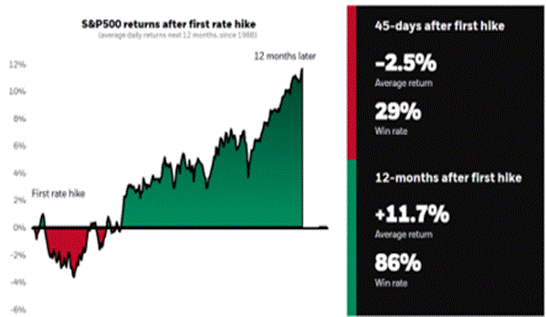
From a contrarian standpoint, this is a very promising development. And it comes against a seasonal backdrop that could potentially push stocks higher after we pass through the election cycle. Let’s start with the role of the Fed in all of this. Stocks normally don’t perform well in the immediate days and weeks after the first hike in the cycle. But after that?
Source: Blackrock, 9-30-26
You can see that the S&P 500 has given us an average return of about -2.5% some 45 days after the first hike. Only 16 days have passed since the Fed raised short-term rates by a quarter point so it’s too early to tell if this go-around will follow history. As of today, the S&P is basically flat since the September 16th hike, up 0.5%. But look at what happens after those 45 days are over. On average, the S&P has been higher 86% of the time in past cycles with an average gain of 11.7%. You know the line about past performance, of course. But 86% is a pretty good success rate.
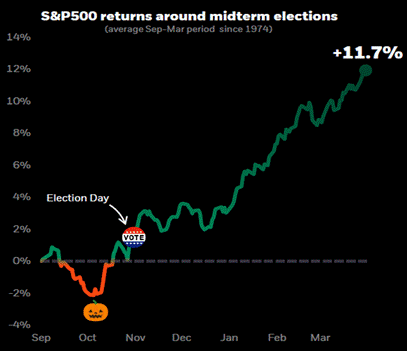
But we’re not done just yet. We have the aforementioned elections coming up on November 3. Uncannily, market returns are almost identical to the Fed cycle I just showed you. Only this time, the early negative return precedes the event itself with the rebound occurring right around Election Day.
Source: Blackrock, 9-30-26
There’s that 11.7% return again, just like the 12-month return after the first Fed hike. Like I said, uncanny. And consider that November 7 marks 45 days after the Fed’s rate hike last month, which is just days after the election. Sometimes these stories just write themselves. With or without a ghostwriter.
Bottom line, the Fed cutting rates along with the upcoming midterms play into the idea that October could display some weakness in stocks. Mr. Market tends to be in a foul mood during the month of Halloween, but he’ll tell you he’s just “creepin’ it real.” But come November and well into 2027, history suggest that we could have a “fang-tastic” run in stock prices.

Yep, really.
- Odds and Ends
- If October does turn out to be challenging month for stocks, we can look back to the summer months when trouble first began brewing. The average stock in the S&P 500 has been hitting some resistance for several months now, with about 70% of stocks in the index down more than 10% from their respective highs. In the much larger Russell 3000 index, more than half have fallen at least 20% since June. And yet the broader benchmarks themselves remain within striking distance of their all-time highs. The so-called “bad breadth” of the current stock market. How is that possible? Remember that an index like the S&P is cap-weighted, meaning the largest companies have an undue influence on index performance. Nvidia, for example, has a weighting of 8% in the S&P. It’s followed by Apple, Microsoft, Amazon, Alphabet, and Meta. Those six behemoths account for 33% of the S&P’s daily performance, and only Amazon is down more than 10% from its highs. This market continues to be driven by AI-related stocks. Those stocks can still perform well going forward. But eventually the S&P itself will stall without more participation from other members. Perhaps that can finally begin after we get into November, at least based on the main point above in the commentary.
- Speaking of Nvidia…
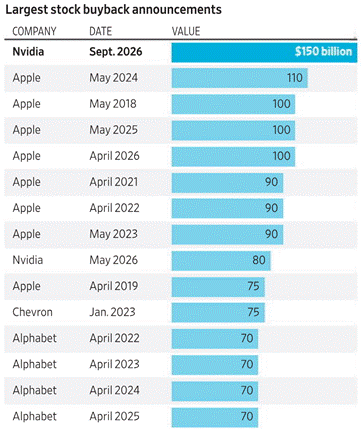
Source: Wall Street Journal, 9-29-26
Led by co-founder and CEO Jensen Huang, Nvidia execs clearly believe their stock is undervalued so they’re scooping up a record amount of shares. And that’s even with the stock back hitting an all-time high this morning, and after it has soared more than 1,000% in the last five years. That doesn’t guarantee success for the stock in the future, of course. But it’s definitely a recognition of the bullishness that Huang and others feel about the success of AI in general, and about their own company in particular.
- I bought my first bank CD in 1978 with a few bucks I made working my first job at the Lake St. Louis Country Club. (The one connected to the 9-hole course on the small lake side.) If I remember correctly, the interest rate was about 10% or so. “You mean the bank is going to pay me ten bucks for my $100 just sitting there? Nice!”
Imagine my confusion when a few years later I heard about a CD that played music. I couldn’t get my head around that concept. A bank CD that somehow emits noise? No, dummy. It’s called a Compact Disc, and it’s going to push your album collection to a dusty corner of the basement someday. Actually, it will be your future wife that does that to you. This is future Dave giving you the bad news. ☹
Yesterday (Thursday) marked the 46-year anniversary of the first CD ever distributed to the public. Billy Joel, who was at the peak of his Hall of Fame career, took the honors of becoming the first artist to release an album on the newfangled Compact Disc. It occurred on October 1, 1982 and it was Joel’s best-selling “52nd Street.”
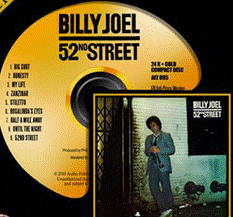
Who knew that decades later my CD collection would also be stored away in a remote corner of the basement…for a while anyway. In our last move, I got rid of my old cassette and CD collections. That was my decision, with a little nudge from my lovely bride of 38 years. But my precious album collection? That’s not going anywhere…EVER! I reminded my wife of this, lovingly hinting that I have Cordell and Cordell on speed dial if those old albums disappear. Just sayin’.
I conduct a little self-examination on this week’s Simons Says podcast episode. I’m an old-school guy, one who believes you have to pick yourself up by your bootstraps and make it on your own without much help from others. That’s how I got ahead in life, gosh darn it! Well, I’ve had to challenge those long-held beliefs. And many of you watching the episode may need to do the same. It’s a fairly provocative but important commentary on recent economic trends. Please check it out.
Should You Give Your Kids an Inheritance Now? A CFP® Explains Gifting Strategies

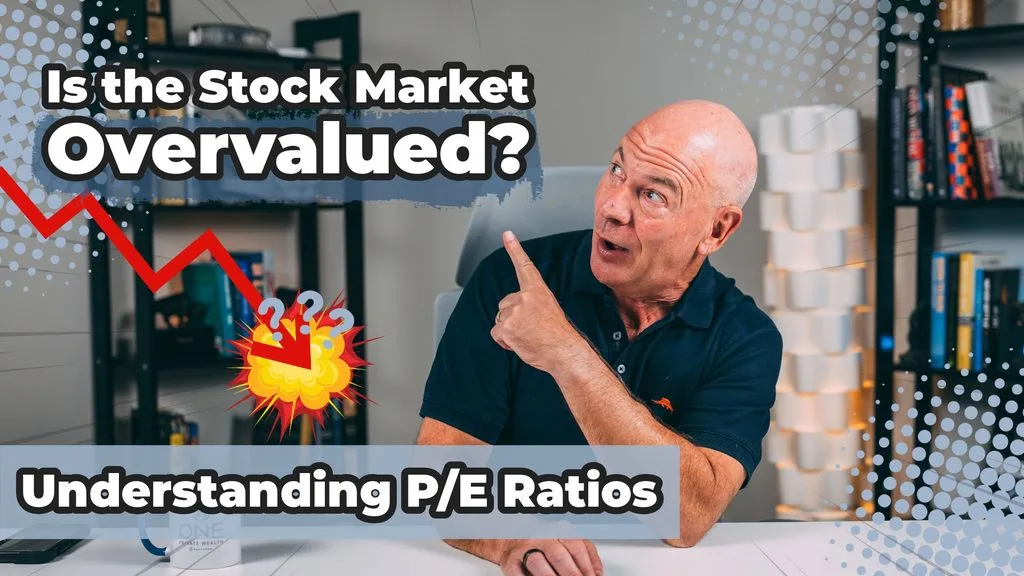
Without a commentary last Friday I wasn’t able to highlight the previous week’s podcast. If you didn’t get a chance to view it then please click on the link below. I push back on a narrative that’s making the rounds these days concerning the market’s valuation.
Is the Stock Market Overvalued? The Truth About P/E Ratios & Shiller P/E
As I’m about to hit send I see we got a fairly light jobs report for September. That’s giving the bond market some much needed relief as the odds of a rate hike later this month have decreased. This in turn is helping boost stock prices. I nice way to end the week.
We’ll talk to you next Friday!
Dave